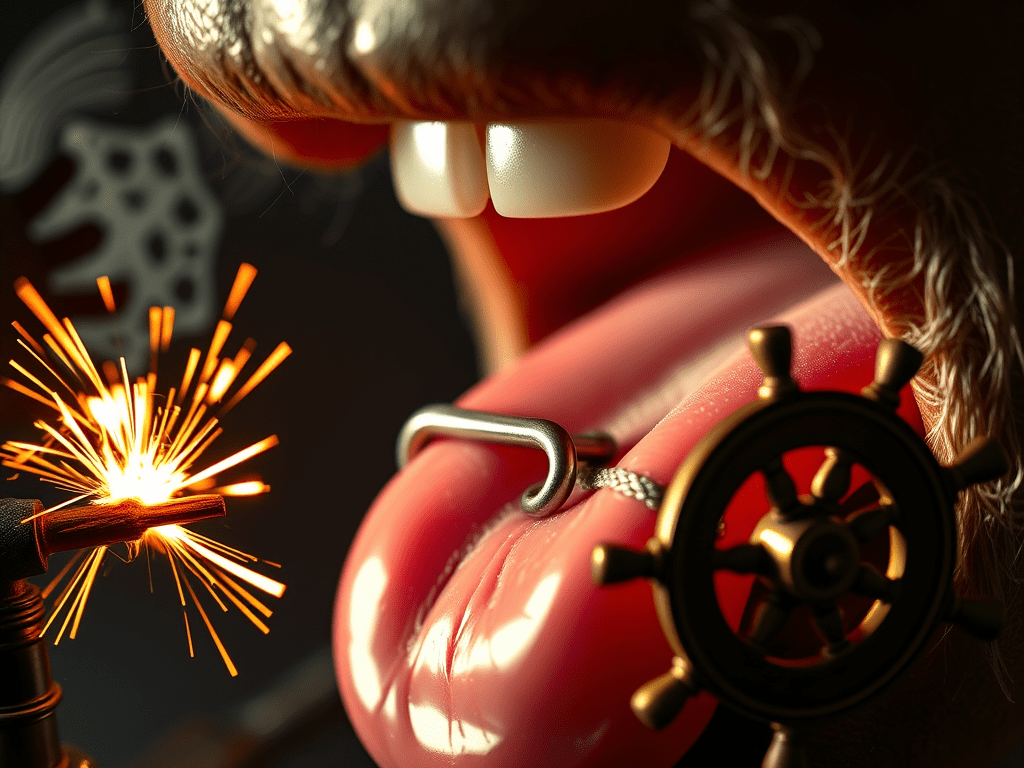
James 3:5 – 12
Introduction
Small things most of the time looks so harmless and easy to deal with. However, small things can be very troublesome. A piece of sand that goes inside your shoes can cause you much discomfort and irritation. An atomic bomb which can destroy a big city and kill millions can be detonated by a push of a small button. The flu virus is very small, we cannot see them, smell, feel them but they can kill and so is the Covid virus. Mosquitoes are very small insect but has killed more people than lions and tigers in the forest. Bed bugs are very irritating during summers, and so are fleas and flies. What other small but terrible things can you think of? The human tongue which may look small and harmless may be the most dangerous and destructive part of our body.
I. The Comparison (Jas. 3:3-4)
A. Three small things yet very powerful
- Bit in the horse mouth. Used to control a big and strong horse. You don’t have to use brute force to put into subjection a horse where you want him to go
- Small helm controls the ship wherever the pilot wants the ship to go.
- Spark of igniting fire can cause wildfires which can destroy forests, and properties.
- Just like the tongue these three has the capacity to do great things. An uncontrolled horse can cause harm and injury to people, so is an uncontrolled ship. A small spark is enough to create a fire capable of massive destruction. A tongue that cannot be bridled can cause so much pain, heartache, as well as lots of trouble to people sometimes more than what we can think of.
- “Death and life are in the power of the tongue,” warned Solomon (Prov. 18:21).
a. No wonder David prayed, “Set a watch, O Lord, before my mouth; keep the door of my lips. Incline not my heart to any evil thing” (Ps. 141:3-4). David knew that the heart is the key to right speech.
b. “Out of the abundance of the heart the mouth speaketh” (Matt. 12:34). When Jesus Christ is the Lord of the heart, then He is Lord of the lips too.
c. Although it is small, the tongue exercises immense power, and it can make or break a person’s life or testimony and do great damage to others as well.
II. Boasteth great things. (Jas. 3:5)
A. What are the great things we boast?
- We boast for our success and material gains. Ps. 49:6
- We boast for our beauty or physical appearance. Young and attractive ladies are trophies of extremely rich men.
- We boast for our influence and accomplishments of our love ones and influential friends.
- We may even boast for our church, our pastor, etc.
B. If we are to boast, we should boast only of the Lord. Psa. 34:2a My soul shall make her boast in the LORD. 1 Cor. 1:31 That, according as it is written, He that glorieth, let him glory in the Lord. We cannot boast ourselves because everything you have was only given by the Lord.
Illustration: James 3:1-5
The words we speak affect the lives of others. A judge says “Guilty!” or “Not Guilty!” and those words affect the destiny of the prisoner, his family, and his friends. The President of the United States speaks a few words and signs some papers and the nation is at war. Even a simple yes or no from the lips of a parent can greatly affect the direction of a child’s life.
Never underestimate the guidance you give by the words you speak or do not speak. Jesus spoke to a woman at a well, and her life and the lives of her neighbours experienced a miraculous change (John 4). Peter preached at Pentecost and 3,000 souls came to salvation through faith in Christ (Acts 2).
On April 21, 1855, Edward Kimball went into a Boston shoe store and led young Dwight L. Moody to Christ. The result: one of history’s greatest evangelists, a man whose ministry still continues. The tongue has the power to direct others to the right choices.
III. The treachery of the tongue (Jas. 3:6 – 12)
A. The tongue is a fire, a symbol or a picture of its destructiveness.
- Uncontrolled it can cause trouble that can destroy families, friendships, relationships, even spilt churches.
- Words can hurt people more than physical pain. A heart wounded by harsh and painful words may take years to heal or may never heal at all. Sometimes rude language spoken of can never be forgotten.
- Sinful words, lies, gossips, murmurings, back biting, just like fire; it can spread rapidly destroying lives and reputations driving people into despair.
- False doctrines and half-truths can send people to hell. This is the most dangerous of all regarding the sins of the tongue which can easily be committed by Bible Teachers who are not really ready to teach.
a. A world of iniquity, a world of unrighteousness “out of abundance of the heart the mouth speaketh (Mat. 12:34b)”, words is an expression of our personality.
b. It defileth the whole body; evil speeches pollute or contaminate the whole body (not literal dirt) but your spiritual wellbeing as a whole.
c. Setteth on fire the course of nature, the circle of life, the whole of people’s life can be ruined by the tongue
d. Set on fire of hell, its evil source is hell, and tongue is used as a tool for evil.
e. Nothing good comes from a loose and uncontrolled tongue. Solomon said, the mouth of the wicked poureth out evil things. (Prov. 15:28) David said, My soul is among lions: and I lie even among them that are set on fire, even the sons of men, whose teeth are spears and arrows, and their tongue a sharp sword. (Psa. 57:4)
IV. The untameable tongue (Jas. 3:7-12)
A. Men were able to subdue and control wild animals, even the forces of nature but not the tongue.
- Unruly evil, because it is unrestrained, or not subject to control, through it men express all other evil things such as greed, lust, blasphemy, and others.
- Full of deadly poison in the sense that it can cause death. Anger, envy, jealousy, malice, slander, is like venom lethal enough to destroy the credibility of believers and churches.
B. No human being in his own power can control the tongue. We cannot control our own tongues and we cannot control the tongues of others. James does not mean that the tongue is impossible to tame but is something extremely difficult to control. It will take the power of God to tame the tongue. To would be teachers let this be a warning.
- Set a watch, O Lord, before my mouth; keep the door of my lips. (Psa. 141:3)
- It would do us all good to read frequently the Book of Proverbs, and to note especially the many references to speech. “A soft answer turneth away wrath: but grievous words stir up anger” (Prov. 15:1). “Lying lips are an abomination to the Lord” (Prov. 12:22). “In the multitude of words there wanteth not sin: but he that refraineth his lips is wise” (Prov. 10:19). Yes, the tongue is Like a bit and a rudder: it has the power to direct. How important it is that our tongues direct people in the right way!
Illustration: Gossip Makers
Yiddish forklore offers a telling tale about gossip-makers. One such man had told so many malicious untruths about the local rabbi that, overcome by remorse, he begged the rabbi to forgive him. “And, Rebbe, tell me how I can make amends.”
The rabbi sighed, “Take two pillows, go to the public square and there cut the pillows open. Wave them in the air. Then come back.”
The rumormonger quickly went home, got two pillows and a knife, hastened to the square, cut the pillows open, waved them in the air and hastened back to the rabbi’s chambers. “I did just what you said, Rebbe!”
“Good.” The rabbi smiled. “Now, to realize how much harm is done by gossip, go back to the square…”
“And?”
“And collect all your feathers.”
From Hooray for Yiddish
C. Strange Inconsistency
- To further illustrate the difficulty of restraining the tongue, James gave us a very clear example.
a. We bless God and curse men. How easy for us to sing praises unto the Lord and how quickly we can curse men when we are angry
b. With our tongue we praise and glorify Him and help one another, but often we use them to dishonour God and hurt each other.
c. We can say good words to deceive, but God knows our heart. It’s the inside that counts not the talks. - Doth a fountain send forth at the same place sweet water and bitter? (James 3:11) Does the same fountain bring forth bitter and sweet water? The answer is evident, whatever kind of water that is in the well comes out of the faucet. Whether bad or good water that is what you get. The whole concept of getting two kinds of water out of the same well is contrary to nature. The same is true of the believer. Anyone who can sit in Church and praise God, then go forth spewing hatred and bitterness toward others has a serious problem.
- James then asks the question, Can the fig tree, my brethren, bear olive berries? either a vine, figs? (James 3:12) Again, the answer is obvious! This too goes against the very laws of nature which were established by God. And God said, Let the earth bring forth grass, the herb yielding seed, and the fruit tree yielding fruit after his kind, whose seed is in itself, upon the earth: and it was so. (Gen. 1:11) Everything produces after its own kind. Just as a fountain is known by the water it gives and a tree by its fruit, man’s heart is known by what the tongue speaks. No wonder Harry Ironside called the tongue “the index of the heart.”
V. CONCLUSION:
Space is too less and time too short to tell more about the tongue. The bottom line is, no man can tame or subdue the tongue. Only by God’s power and grace can we do this. Indeed, the tongue is small but terrible. Let us pray always Psalms 141:3 Set a watch, O LORD, before my mouth; keep the door of my lips.



 Gospel Bible Baptist Church
Leave a comment