
The Epistle of James
Introduction
James is one of the so-called Catholic Epistle. “Catholic” means universal. James is one of the seven epistles (James, I and II Peter, I, II, III John and Jude) that are referred to as the “Catholic” or “General” Epistles. These are (with the exception of II and III John) epistles that were not written to specific churches. They were written to a broader group of believers and not restricted to the church in any one place. The Catholic epistles and the Letters of Paul played a crucial role in molding the church.
I. Who was James?
A. James, the brother of Jesus (Mat. 13:58; Mk. 6:3)
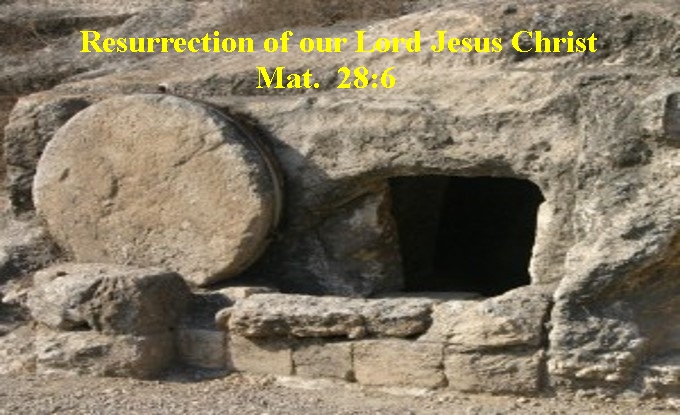
B. James initially rejected Jesus as the Messiah (Jn. 7:5). However, in Acts, he had a sudden change of heart toward Jesus. The only logical reason is – the resurrection of our Lord and Saviour Jesus Christ (1 Cor. 15:7).
C. James became one the leader in the church in Jerusalem.
- Peter sends news of his escape from prison to James (Acts 12:17).
- James presides over the Council at Jerusalem (Acts 15:13-21).
- Paul met with Peter and James when he first went to Jerusalem after becoming a Christian (Gal. 1:19; 2:9).
- Paul later listed James, Peter, and John as “those reputed to be pillars” of the church (Gal. 2:9). James 1:1-12.
D. James is the Greek form of “Jacob”.
II. What kind of man was James?
A. He must be truly spiritual man to gain such distinction in the church at Jerusalem
B. Tradition tells us that he was a man of prayer
C. We can see that he the emphasis on prayer in this letter.
D. It was said that he prayed so much, his knees were as hard as a camel’s!
E. Tradition tells us that James was martyred in 62 A.D.
F. It is said that he was cast down from the temple, and then beaten to death with clubs.
III. To whom did he write this epistle?
A. To the twelve tribes which are scattered abroad ” (Jas. 1:1)
- James wrote to Jews living outside the land of Palestine
a. “Twelve tribes” refers to people of Israel, the Jewish nation – Acts 26:6-7
b. After the Assyrian and Babylonian captivities, many of the Jews were scattered throughout different places. - James wrote his letter to Christian Jews
a. At least nineteen times he addresses them as “brethren”
b. That these were brethren “in the Lord” and not just brethren “in the flesh” is evident from Jas. 2:1
B. It is likely that many of these Christian Jews were poor and oppressed. - Being Jews, they were rejected by Gentiles
- Being Christian Jews, they were also rejected by many of their own countrymen
- This epistle shows that most of these believers were poor, and some were being oppressed by the rich – Jas. 2:6-7
IV. What is the reason for writing this Epistle?
A. This letter suggests that people were having problems in their personal lives and in the church.
- They were going through difficult trials
- They were facing temptations to commit sin
- They were hearers, but not doers
- Some were having favoritism in the church specially to the rich.
- Some were drifting from the faith
B. These problems are not much different from modern churches today. - There are church members who are suffering for financial, emotional, spiritual, relational problems, psychological problems and many others.
- There are members who loves to talk and criticize others but they themselves are not living the way they should. (Talking but not living as they should)
- Some are Worldly.
- Some of them cannot control their tongues.
- It looks like James is dealing with our present church problems.
C. But James was not talking about some unrelated problems. - All of these problems are caused by Spiritual Maturity
a. These Christians needs to grow up spiritually.
b. Look again at some the problems dealt with and you can see that each one of them is characteristic of little children:
1) Impatience in face of life’s Trials – Jas. 1:1-4
2) False Profession – Jas. 2:14
3) Evil speaking or lack of control on their tongues – Jas. 3:5
4) Evil desires, i.e. fighting and coveting – Jas. 4:1
5) Being materialistic – Jas. 5:1 - This gives us a strong hint as to the basic theme of this epistle: Marks of maturity in the Christian life:
a. In fact, James uses the word “perfect” several times, a word that means “mature, complete”
b. By the expression “a perfect man” (3:2), James did not mean a sinless man, but rather one who is mature, balanced, one who is “grown-up”
D. And so, James writes to fulfil a great need: that of spiritual maturity
- Spiritual maturity is one of the greatest needs in churches day
- God is looking for mature men and women to carry on His work, and sometimes all He can find are childish adults who cannot even get along with each other!
- As one person said, “Too many churches are like playgrounds for children instead of workshops for adults.
- James wrote to meet this need, so his epistle is very applicable today!
V. Conclusion:
Just because a person is adult in his age, we can say that he is a matured person. When it comes to spiritual maturity, it is different. Matured Christians can still be joyful even in the midst of trials and difficulties. They can resist and overcome temptations, and they can be a source of encouragement in the church. As we study this Epistle, I pray that with the Lord’s help and guidance, we all will mature together.





 Gospel Bible Baptist Church
Leave a comment